
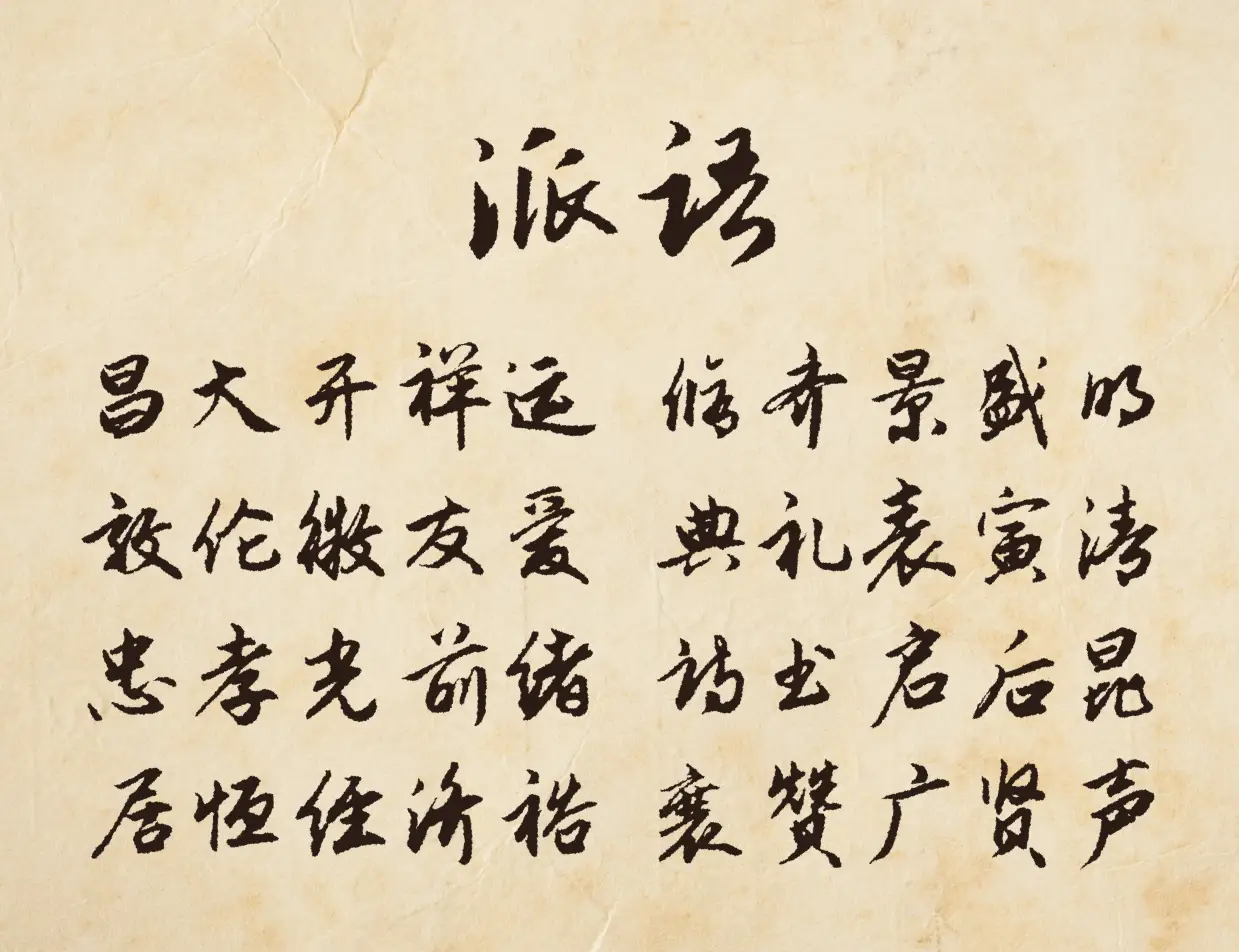
What is a Generation Poem?
In the past, Chinese families often chose a shared character for everyone in the same generation—most commonly for males, but sometimes for females as well. Brothers and cousins might share the same generation character in their names, showing which generation they belonged to. These shared characters often formed a generation poem, helping clans remember and pass down to each generation.
Use Generation Poems to Find Your Jiapu
A jiapu (家譜) is a clan's genealogy book, recording family history across generations. If you know a few characters from your family's generation poem, you can use them to search for your jiapu. Because each clan's poem is unique, even a handful of generation characters can act like a fingerprint, helping you discover your family's records.
Try Advanced Jiapu Search
How Generation Poems Shape Chinese Names
Chinese names usually begin with the family surname, followed by one or two given characters. The generation character is most often the first given character, though in some families it comes second. The remaining character is most commonly the personal name, unique to the individual.
Surname
Given Name
Lǐ
Clan Name
The surname comes first because the family is more important than the individual.
Yào
Generation Character
This character identifies the generation the individual belongs to.
Míng
Personal Character
This character is the only part of the name that is unique to the individual.
Why Generation Poems Matter
Generation poems aren't just about names—they shaped how families understood who they were and how they fit in the larger clan:
Family Identity
Generation poems showed where someone belonged in the family line. Sharing the same character made it clear who was from an older, a younger, or the same generation.
Guiding Values
The characters often conveyed virtues such as loyalty, respect, or wisdom. They expressed the hopes families had for each generation, reminding descendants of the ideals they were meant to uphold.
Order and Respect Across Generations
Generation characters reinforced traditional hierarchy, helping families show respect to earlier generations and maintain order within the clan.
How Generation Poems Appear In a Family Tree
This generation poem assigns a character to each generation. Below, notice how 義 (Yi), 禮 (Li), and 智 (Zhi) from the poem appear in the names of fathers, sons, and grandsons.
Generation Poem
仁義禮智信忠孝廉恥勇
Example family tree. Grandfather: 王義明. His sons: 王禮和, 王禮仁, 王禮正. The sons of 王禮和: 王智勇, 王智偉. The son of 王禮仁: 王智豪. The sons of 王禮正: 王智成, 王智宇. The generation character is 義 for the grandfather, 禮 for his sons, and 智 for his grandsons.
Discover a Poem in Your Tree
Open your family tree, and look for repeating characters in names. A hidden generation poem may already be there, waiting to be found.
Go To My TreeKey Things to Know About Generation Poems
Here are some common patterns and traditions families followed when using generation poems in names.
Mostly Used for Males
Generation poems were primarily created for male descendants, giving brothers and cousins a shared character in their names. In some cases, daughters also received a generation character, either matching or distinct from the males in the family.
Placement in the Name
The generation character could appear in different positions in a name. Most often it came first, but some clans placed it second, creating variation while preserving the shared link across relatives.
Given Names and Courtesy Names
Most families used generation poems only for given names (名). However, some clans created additional poems for courtesy names (字), layering tradition into both formal and everyday identities.
Poem Structure
Generation characters were arranged in ordered lines, usually in sets of 5 or 7. Some poems followed rhyme schemes, while others did not, but all provided a sequence for naming across generations.
What If I Don't Know My Generation Poem?
Even if your family’s genealogy record (jiapu) doesn’t include a written poem, you can often recognize repeating patterns in the names. Children and cousins in the same generation commonly share a character, which acts like a hidden poem even if it was never recorded.
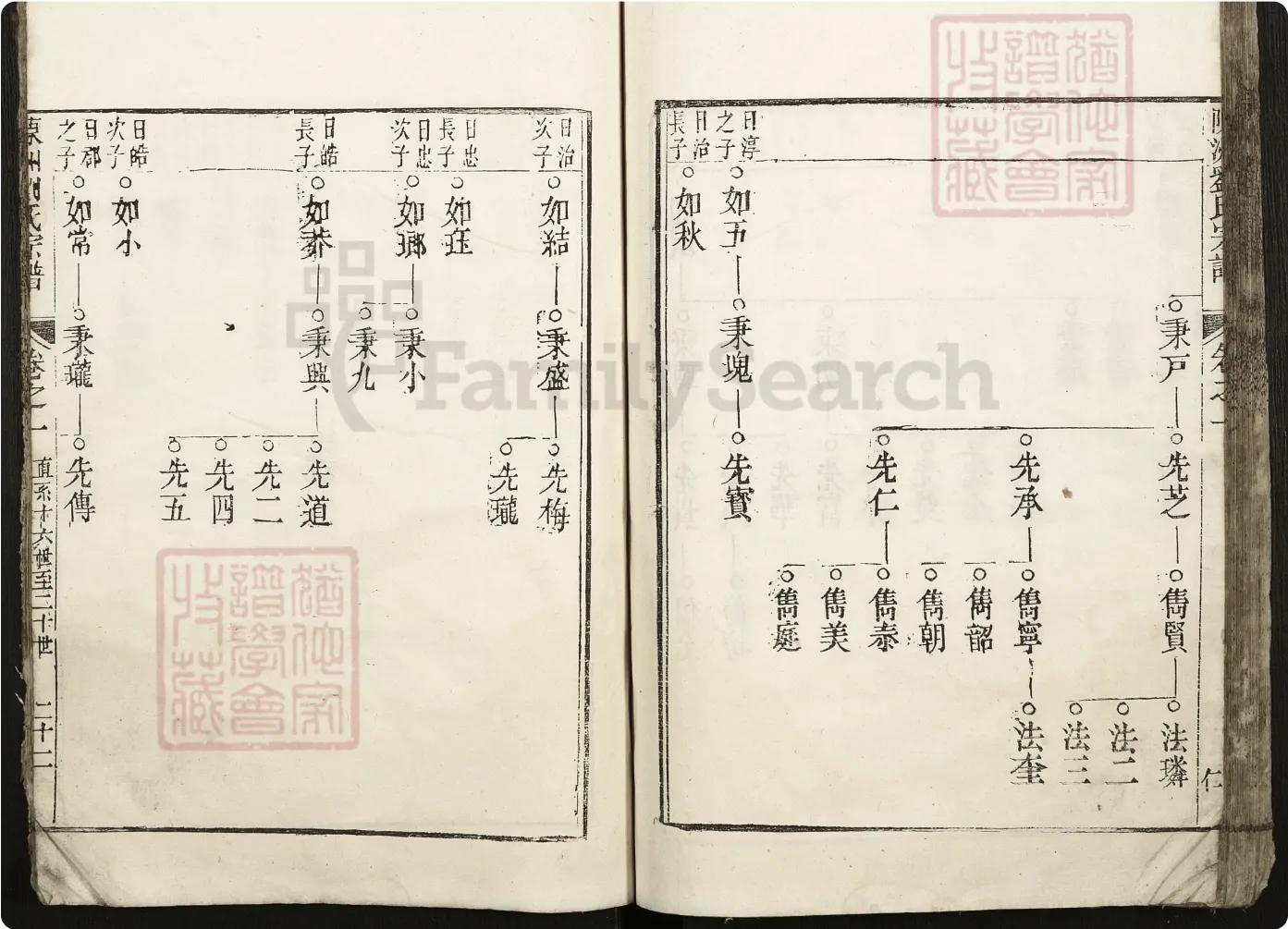
What Is a Jiapu?
A jiapu (家譜) is a Chinese genealogy book that records family names, relationships, and sometimes generation poems.
Learn More李明
張偉
周珩
Single-Character Names and Changing Traditions
By the Ming Dynasty, 2-character given names had become common, often shaped by clan traditions and generation poems. But in the mid-20th century, many of these traditions declined, and single-character names without a generation character grew more popular.
Even so, many families—especially in rural southern China and overseas communities—still pass on generation characters today, keeping alive the link between names and family heritage.