Skip to Main Content
FamilySearch
  • Overview
  • Tree
  • Find
  • Following
  • My Contributions
  • Person List
  • Records
  • Full Text
  • Images
  • Family Tree
  • Genealogies
  • Catalog
  • Books
  • Research Wiki
  • Cemeteries
  • Newspapers
  • Overview
  • Gallery
  • Family Feed
  • Overview
  • Opportunities
  • Your Impact
  • What is Indexing
  • All Activities
  • Together App
  • Where Am I from?
  • Surname Origins
  • All About Me
  • Famous Relatives
  • Compare-a-Face
  • Record My Story
  • Picture My Heritage
  • Search Articles
  • Help and Learning
  • Getting Started
  • Community
  • Helpful Resources
  • Contact Us
Sign Up
Explore More Topics

What is a Clan Genealogy Book?
Explore the Jiapu Guide
  • Facebook
  • Messenger
  • X
  • WhatsApp
  • Email
  • Copy Link

Jiapu

A jiapu, also called a zupu, is a traditional book that records family lineages. It preserves the family's bloodline heritage, often tracing back hundreds of years of history, usually focusing on male descendants, and serves as an important basis for studying family history.

Understanding Your Jiapu

Jiapu Guide

Your jiapu holds generations of your family's story. The Jiapu Guide helps you read and understand each part—even if you don't know Chinese.

Explore Guide

Common Jiapu Styles

Start exploring the common styles below. Click a style to see how it's structured inside the guide.
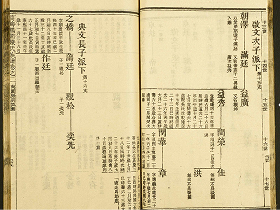
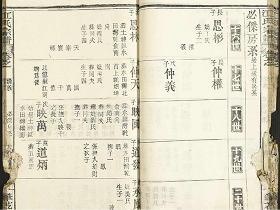
Su Style (蘇式)

Hanging Pearl Style (垂珠體)

Ou Yang Style (歐陽式)

Horizontal Style (橫行體)

Imperial Style (牒記式)
Pagoda Style (寶塔式)
Document Style (文檔式)

Story Line Style (流水式)

What Makes a Jiapu Unique?

A jiapu is not just a family tree—it records one clan's generational heritage, starting from the founding ancestor and continuing generation by generation.

  • Top-down arrangement: Starting from the founding ancestor, recording male descendants generation by generation.
  • Different recording methods for women: Wives are usually recorded only by surname, and daughters are rarely included.
  • Clan-centered: Focuses on presenting the history of a single family, different from Western family trees that often record the marital relationships of multiple families.

A jiapu is more than just a record of names. Its purpose is to preserve the identity and unity of the clan across generations. Many include not only charts of descendants but also biographies, migration histories, ancestral portraits, cemetery maps, family rules and teachings, generation poems that determined naming conventions, and detailed accounts of significant family events that shaped the clan's identity over centuries.

What's Inside a Jiapu?

Every jiapu is different, but most combine history, traditions, and detailed records. The following lists common contents, divided into three main categories:

Introductions and Origins

  • Preface
  • Surname Origins
  • Migration History
  • Examples
  • Table of Contents

Ancestral and Family Details

  • Ancestral Portraits
  • Cemetery Maps
  • Ancestral Hall

  • Family Rules
  • Family Teachings

Records and Charts

  • Pedigree Chart
  • Biographical Table
  • Biographies
  • Generation Poem

  • Postscript

How Do I Find My Jiapu?

A jiapu is not just a family tree—it records one clan's generational heritage, starting from the founding ancestor and continuing generation by generation.

  • Ask relatives – Talk to parents, grandparents, and elderly relatives. They may have a jiapu themselves or know someone else who has one.

  • Visit your ancestral village – Local elders, ancestral halls, or clan associations are often the most reliable sources for finding a jiapu.

    Learn More
  • Search online – The most convenient way is through large databases. You can use the following links to search the three largest collections:

    Jiapu Search
    Shanghai Library

I Found My Jiapu—Now What?

You can use the Jiapu Guide to identify names, villages, and generations and other key information. After confirming your ancestors' identities, add them to the FamilySearch Family Tree to preserve this information and continue building your family tree.

Family Tree

RememberDon't Give Up!

Even if someone says your family's jiapu has been lost, there may still be hope. Many copies are often preserved through distant relatives, or through clan members who emigrated overseas before the 1960s. Some or even complete jiapu can still be found in places like Malaysia, Singapore, or the United States today. Keep searching—you may be surprised to discover that your family records still exist.

About
  • Our Story
  • Newsroom
Ways to Contribute
  • Get Involved
  • What is Indexing
  • Volunteer
  • Donate
  • FamilySearch Labs
For Church Members
  • Ordinances Ready
  • Family Name Assist
  • Leadership Resources
  • Temple and Family History Consultant Training
FamilySearch Apps
  • Family Tree Apps
  • Memories App
  • Get Involved App
  • Together App
  • All Mobile Apps
Genealogy Resources
  • Obituaries
  • Cemeteries
  • FamilySearch Catalog
  • Ancestor Search
  • Genealogy Search
  • Place Names
  • Guided Research
  • Digital Books
Get Help
  • User Community
  • Help Center
  • Contact Us
  • Your Account
  • Suggest an Idea
Industry
  • Archives
  • Developer Center
  • Solutions Gallery
Guidance and Learning
  • Getting Started
  • RootsTech Conference
  • What's New
  • Learning Center
  • Genealogy Research Wiki
  • YouTube Channel
  • Free Virtual Consultations
  • Blog
Locations
  • Salt Lake FamilySearch Library
  • Find a Local FamilySearch Center
  • FamilySearch Affiliates
What We Offer
  • Family Tree
  • Genealogy Records
  • Family Photo Sharing
  • Family Activities
  • Learning Resources
  • Research Guidance
  • DNA Education
  • Surname Meanings
Third-Party Access
  • Ancestry
  • MyHeritage
  • FindMyPast
  • American Ancestors
  • Geneanet
  • Storied
  • All Third-Parties
FamilySearch

Inspiring people everywhere to connect with their family—across generations.
FamilySearch is an international nonprofit organization. Donate or volunteer today!

Accessibility Support
FamilySearch Legal Center | FamilySearch Terms of Use | FamilySearch Privacy Notice |  | Site Map | Country and Language Options
© 2026 by Intellectual Reserve, Inc. All rights reserved. A service provided by The Church of Jesus Christ of Latter-day Saints.
A service provided by The Church of Jesus Christ of Latter-day Saints.

Jiapu Guide

Su Style (蘇式)Ouyang Style (歐式)Imperial Style (牒記式)Pagoda Style (寶塔式)Document Style
12345678910111213141516171819
Imperial Style Jiapu

Place of Burial

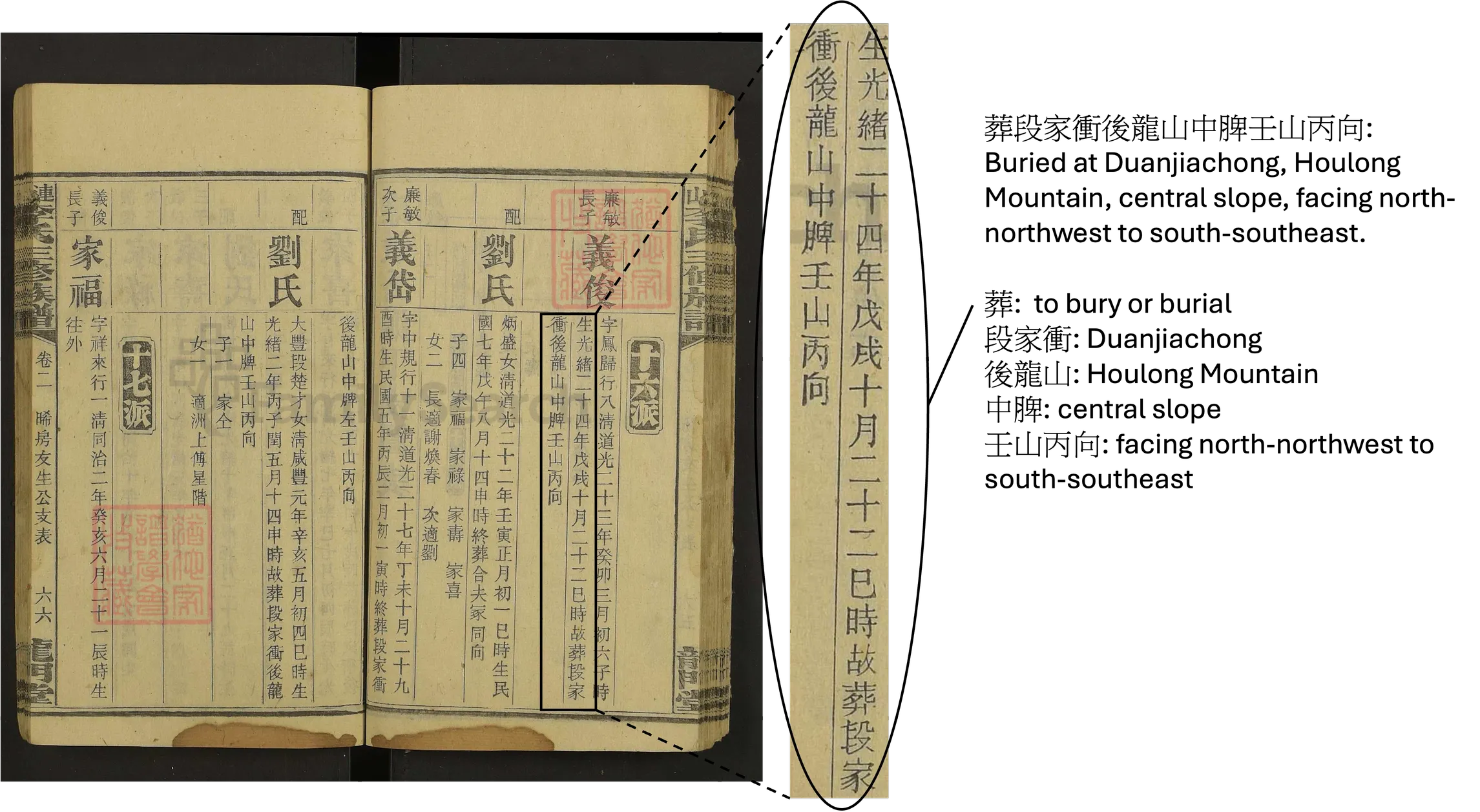
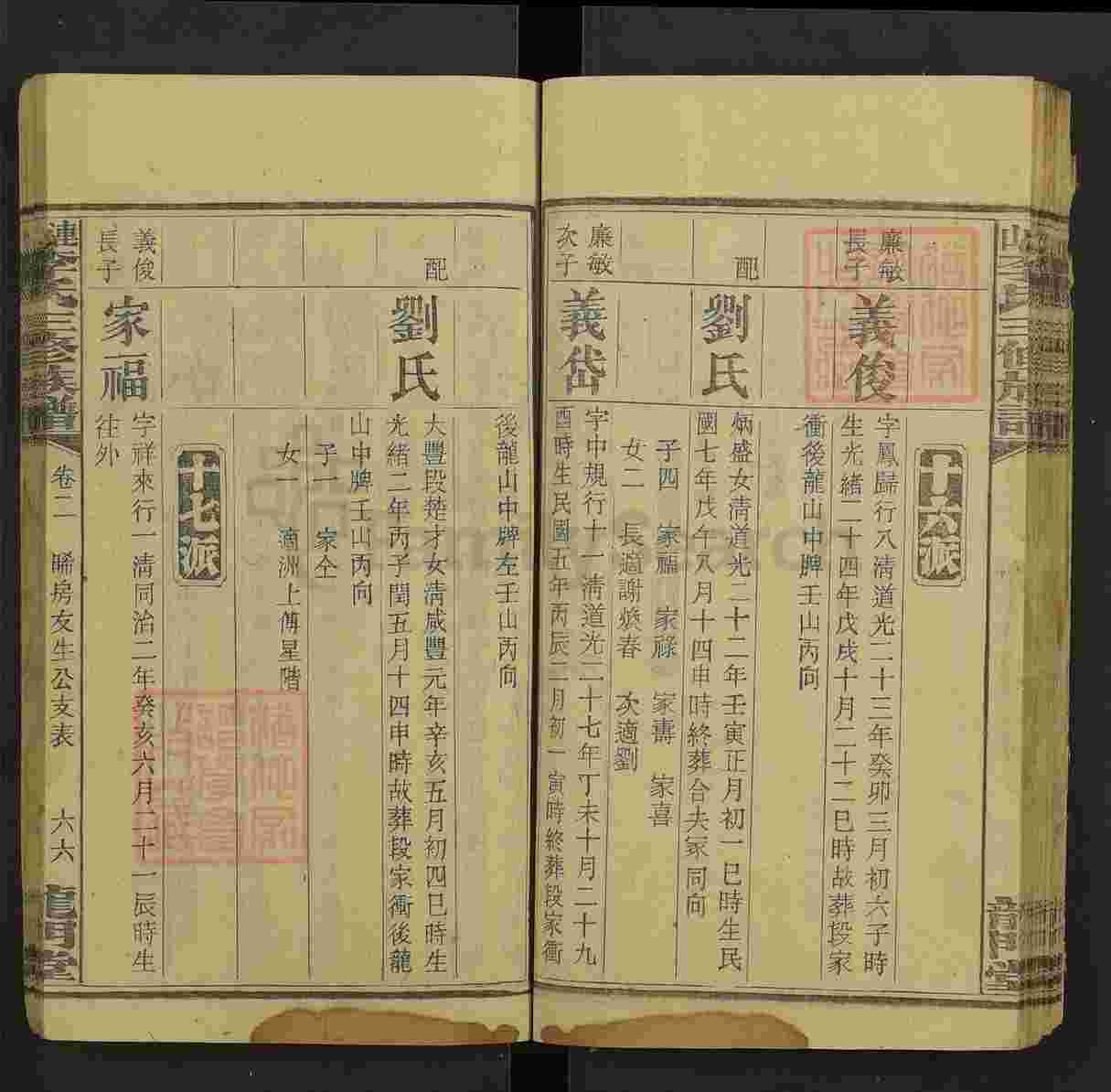
葬段家衝後龍山中脾王山丙向

Buried at Duanjiachong, Houlong Mountain, central slope, facing north- northwest to south-southeast

The place of burial generally follows the Date of Death and most often begins with 葬 (buried) or 合葬 (buried together). It can be tricky, though, to figure out where the burial information ends, as the description of the place may be long or short, depending on the level of detail the recorder chose to include. In this example, the place starts with 段家衝 (Duanjiachong), then indicates it's in the 中脾 (central slope) of 後龍山 (Houlong Mountain), and ends with the direction of the burial mound, 壬山丙向 (facing north-northwest to south-southeast).

Learn More

Jiapu Legend

  • Intro: Imperial Style (牒記式)
  • 1.  Surname
  • 2.  Generation
  • 3.  Father's Name and Birth Order
  • 4.  Given Name
  • 5.  Alternate Name
  • 6.  Birth Order Among All Children
  • 7.  Date of Birth
  • 8.  Place of Birth
  • 9.  Date of Death
  • 10.  Place of Death
  • 11.  Place of BurialOpen
  • 12.  Spouse's Surname
  • 13.  Spouse's Father
  • 14.  Spouse's Date of Birth
  • 15.  Spouse's Date of Death
  • 16.  Spouse's Place of Burial
  • 17.  Number of Sons
  • 18.  Number of Daughters
  • 19.  Surnames of Sons-in-law

Place of Burial

Place of Burial Details

The place of burial generally follows the Date of Death and most often begins with 葬 (buried) or 合葬 (buried together). It can be tricky, though, to figure out where the burial information ends, as the description of the place may be long or short, depending on the level of detail the recorder chose to include. In this example, the place starts with 段家衝 (Duanjiachong), then indicates it's in the 中脾 (central slope) of 後龍山 (Houlong Mountain), and ends with the direction of the burial mound, 壬山丙向 (facing north-northwest to south-southeast).

In some instances, the place of burial ends by describing the shape of the burial mound.

There are two things of note concerning the place of burial:

  1. The place of burial is usually a description of a local place that is too small to find on a map. For instance, the jiapu might say that the person (or couple) was buried on the north side of such-and-such hill next to large rock formation. This is useful if you want to visit the exact spot to perform ritual sacrifice or burn incense. It can also be important if the jiapu notes that there is an inscription at the burial site (usually only for famous ancestors).
  2. The place of burial may be the same for the couple or they may be buried separately.
Types and shapes of burial mounds
龜殼墓Turtle shape burial mound

Turtleback tombs are often seen in Taiwan and some coastal provinces of southern China. A turtleback-style tomb has a vertical tombstone with the name of the deceased placed where the tortoise's head would be, and the body is buried beneath the turtleback.

方形墓地Square shape burial mound

Square shaped burial mounds were often used for ancient imperial families, as the square symbolizes stability, integrity, justice, and strength. In Feng Shui, the square-shaped burial mound is also considered an auspicious shape.

曲線型墓地Curve shape burial mound

Curved shape burial mounds can be either convex or concave. In Chinese Feng Shui, the convex curved shape of a grave will radiate the aura outwards from the cemetery and absorb external auras, thereby creating a valuable environment. The concave curved shape of a tomb is more likely to attract the aura of the environment and form a protective aura.

圓形墓地Circle shape burial mound

In ancient China, rounded structures were rarely seen in residential architecture, as many believed they were ominous. However, in the context of burial mounds, the round shape is considered ideal. It symbolizes perfection, completeness, and happy reunion, which are believed to benefit the health and longevity of the tomb owner and their descendants.

椅子墳Chair shape burial mound

Chair shape burial mounds are common in southern Zhejiang. Named for their mound shape that resembles a chair, Chair shape burial mound typically adhere to mountainsides, with one side higher than the other. They have no monuments; instead, the tomb owner's information is carved into a central slate. Descendants are buried beneath the ancestor's tomb, with generations forming a long, staircase-like tomb.

Previous: Place of Death
Next: Spouse's Surname