Clues from Chinese Gravestones
Gravestones Can Help You Trace Your Family’s Past
It's More Than Just a Name
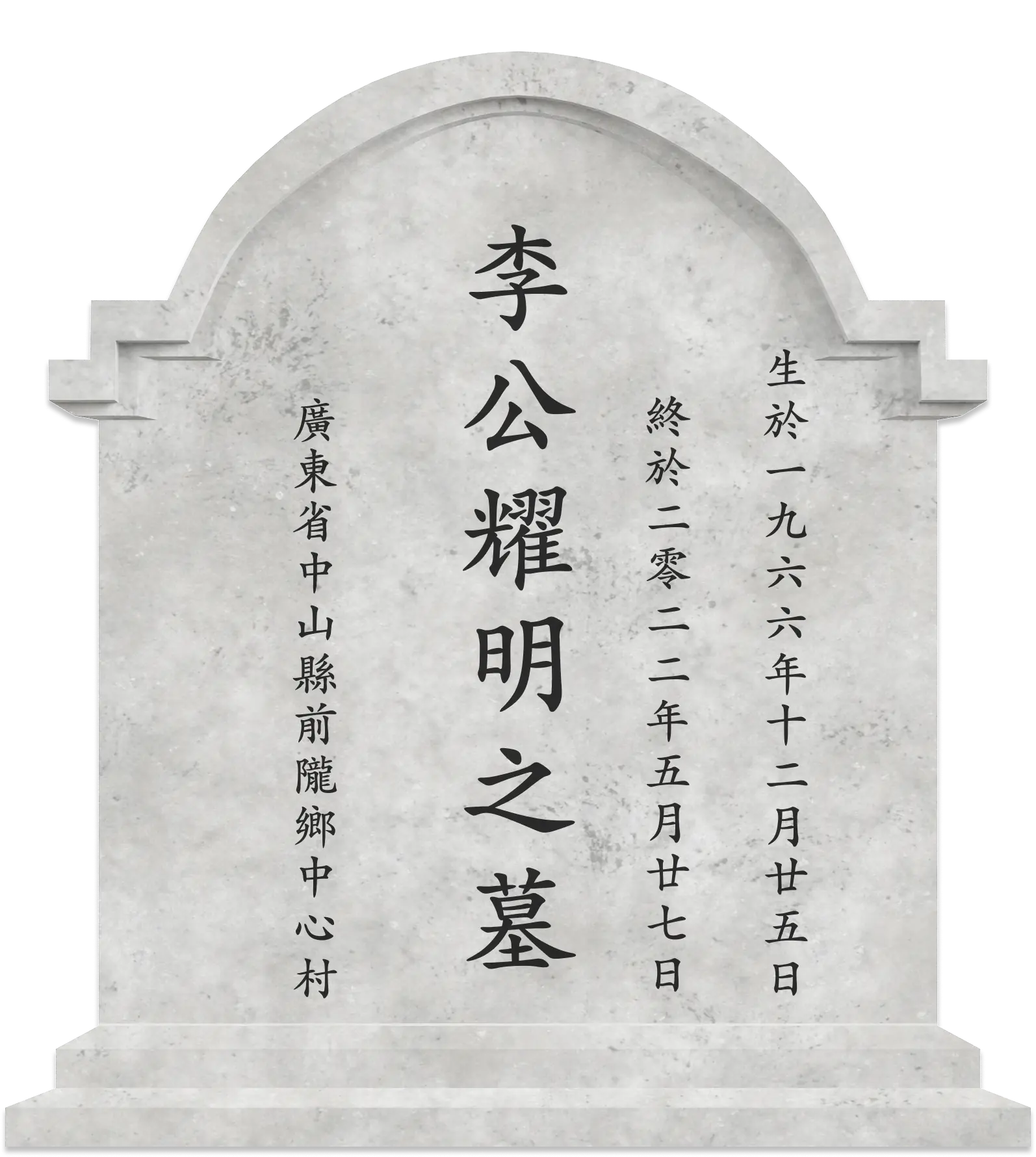
Traditional Chinese gravestones often contain far more than just a name. In addition to honoring your ancestor, they may give clues about your family's roots—such as the Chinese character for the surname or references to the ancestral village.
How to Uncover a Chinese Gravestone's Secrets
Even if you don’t read or speak Chinese, you can still unlock valuable details.
Locate the headstone.
Use family stories, plot maps, cemetery records, or online tools listed on this page to find your ancestor’s grave.Photograph the inscription.
Stand squarely in front of the gravestone, avoid glare or shadows, and take a clear, head-on shot, ensuring a clear view of every character.Refer to our gravestone guide.
Use our Gravestone Guide below to help you recognize key names, symbols, and phrases—so you can start uncovering your family’s story.Record your findings in the tree.
Enter the names, birth and death years, villages, clan titles, or other inscriptions into your family tree.
Understand the Characters on a Gravestone
Gravestone Guide
You don't need to read Chinese to learn from a gravestone.
This guide shows you how to recognize key names, symbols, and phrases—so you can start uncovering your family's story.
View the GuidePro TipGravestones and Ancestral Villages
Many overseas Chinese gravestones don't list the exact ancestral village. Instead, you might see a single character that stands for a broader region or older place name—common in the past, but often confusing today.
Here are two examples and what they actually mean:
(Níng)
If you see this character, it means 台山 Taishan (Toisan).
It's short for 新寧 Xinning (Sunning), the historical name for Taishan, used before 1914. Many early Chinese immigrants came from this area.
(Xiāng)
If you see this character, it refers to 中山 Zhongshan (Chungshan).
It's short for 香山 Xiangshan (Heungshan), the older name for Zhongshan, used before 1925. This region is another common ancestral home.
Where Can I Find My Family's Graves?
In China, burials traditionally took place in the family’s home village, often on a hillside. Outside of China, discriminatory policies barred many Chinese immigrants from public cemeteries, so local associations created their own to honor their dead and preserve tradition.
How can I get help with my Chinese Genealogy Questions?
Expert Help
Get one-on-one help from a Chinese genealogy expert—for free.
Schedule a session to get help reading gravestones, understanding ancestral records, and much more.
Schedule a sessionWhat Does It Mean To Be a Paper Son?
Faced with harsh anti-Chinese immigration laws in the United States and Canada, some immigrants entered the country under false identities—often posing as the sons of men already living there. These individuals became known as "paper sons".
If the English name on a gravestone doesn’t match the Chinese character, that character could reveal your ancestor’s true surname.
Women's Names on Gravestones
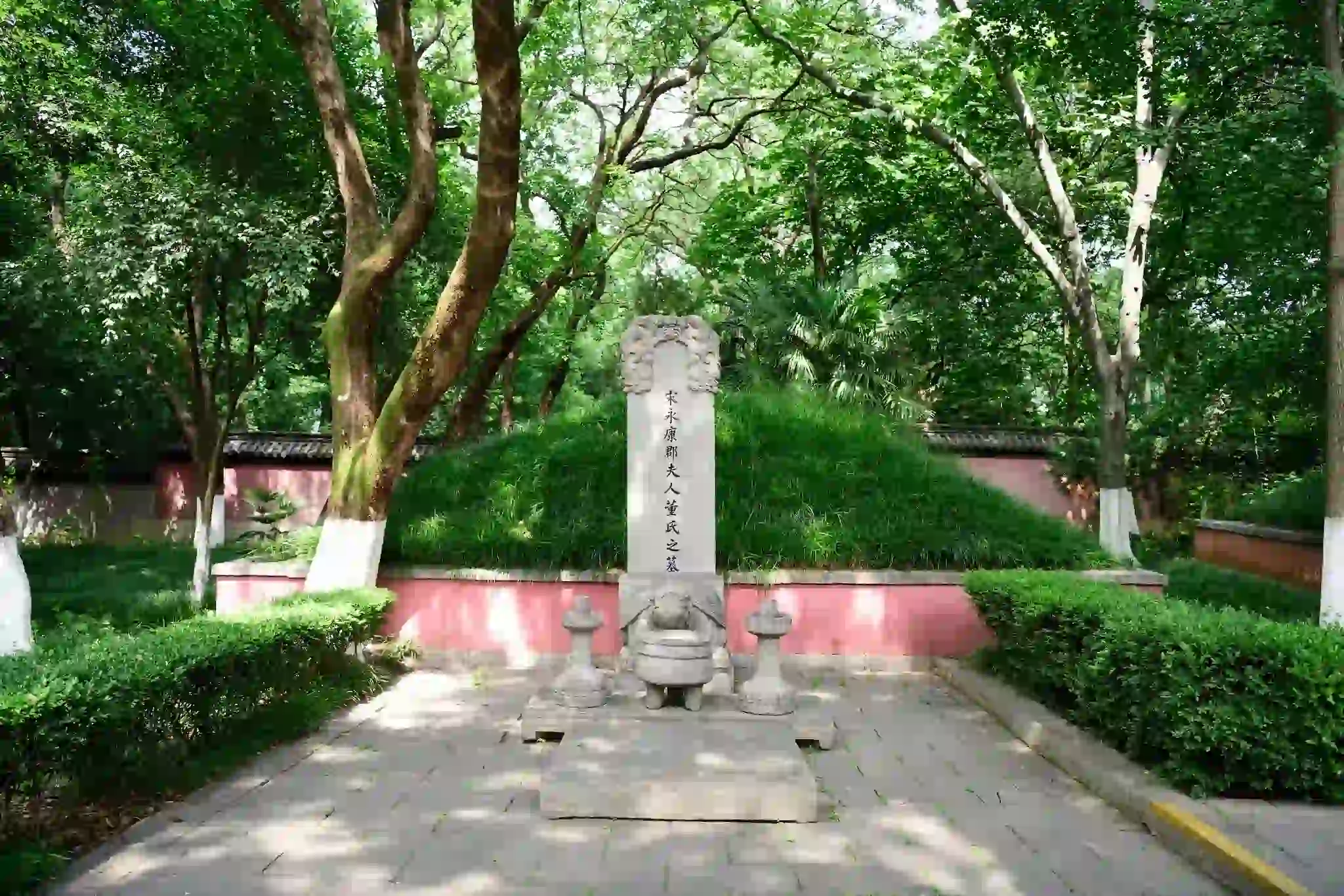
On many Chinese gravestones for women, you may see the character 門 (mén), meaning “door.” This character is often followed by the husband’s surname, showing that the woman married into his family. This is often followed by the woman’s surname and the character 氏 (shì), meaning “clan” or “surname.” Together, these elements reflect both her married and birth families.
Look for this pattern:
[Husband's surname] + 門 + [Woman's surname] + 氏
In traditional Chinese culture, 門 symbolized the doorway a woman passed through when she left her birth family and entered her husband's household—a shift from one family to another.
Preserve Your Gravestone Photos Before They're Lost
Even stone wears away with time. Important names and dates can fade quickly, sometimes in just a few decades. The best time to preserve a gravestone is now.
You can upload and preserve gravestone photos on several trusted sites:
Pro tip:
Qingming Festival
Each spring, Chinese families honor their ancestors by visiting their graves during the Qingming Festival—also called "tomb sweeping." Families clean the site, burn paper money, and make offerings to show respect and keep traditions alive.
If you don't know where your family's graves are, ask older relatives—they may have gone tomb sweeping and know exactly where to look.